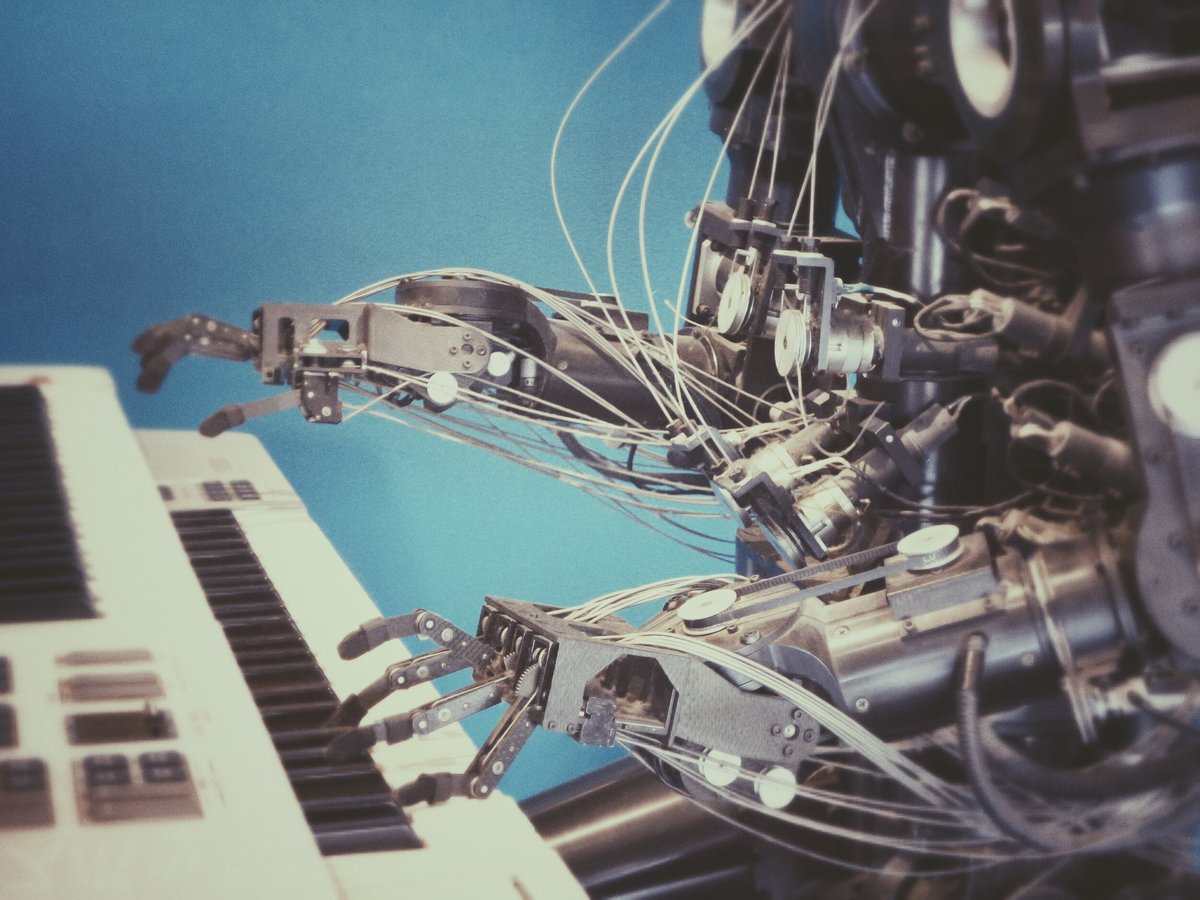
AI - The Next Industrial Revolution
01/01/1970
Artificial Intelligence is here, and it’s already changing the way we live, the way we interact and the way we work. Being able to adapt to a new set of rules in the future will be the defining characteristic between those who succeed and those who are left behind. It’s not the first time the human race has faced an event that will dramatically alter the way we live our lives; the first Industrial Revolution occurred about 250 years ago, and there are some interesting comparisons to be made. Just like the Industrial Revolution, there are winners and losers in the process. We can learn lessons from history to make sure we ride the wave of AI and don’t get swamped by it. Resources In the late 1700s, a number of factors came together to set the scene for the Industrial Revolution. The abundance of coal and iron in Britain at the time was key in launching the era of steam power and machinery. Today, the technology to process huge amounts of data in microseconds is our equivalent, and has become the launching pad for AI. The Workers Prior to the Industrial Revolution, fabrics such as wool and linen were made on farms and in people’s homes. With the invention of spinning and weaving machines, driven by water and later steam, the spinners and weavers jobs no longer existed. Enter the modern day engineer, a profession who have traditionally used mathematics, technology and science to solve problems, and provide a commercial solution. In the near future, much of this work will be able to be performed by AI. Like the textile worker, their job as we know it will no longer exist, so how best to adapt? Let’s look back at the winners in the Industrial age. There were some very clever people, such as John Kay who invented the mechanised weaving process, who provided the technology for change. But in fact the people who became wealthy were not necessarily the inventors but the ones who could leverage this knowledge - the factories who produced the products in volume. Essentially the companies that owned the factories didn't need the inventors to be successful, they did however need employees who could use the inventor’s tools to their full potential and understand when external help was required. Similarly in the AI revolution, our inventors are the software solution providers. Companies will not need people who can build the AI robot, but they will need workers who can decide what information the robot needs, what the outputs should be, and how to be the human link throughout the process. External contractors will fill the specialist roles outside of the company’s knowledge base, just in the same way the factories brought in specialists to fix/update their machines. The Future The engineers of the future will be those who recognise where their value lies, and are able to mobilise this in a way that creates value for the capital owners. In engineering, the ability to have a design mindset, demonstrate rational thinking and emotional IQ will out value being a maths whizz. During the first Industrial Revolution, there were some English textile workers who lost their jobs and became a radical group destroying textile machinery in protest. They feared that the time spent learning the skills of their craft would go to waste as machines would replace their role in the industry. This group was named the ‘Luddites’, a name that nowadays describes someone who fears technology. Life didn’t work out well for the luddites of the 1800s as they hung on to what was familiar. Sometimes change is inevitable and it’s up to us to decide how we shape it to work for us.
We know you're busy so let's get straight to it — How can we help you today?